Where Do UK Universities Draw the Line on AI Use in Coursework in 2026?
The core distinction in UK coursework is not whether digital tools were consulted, but how they were used to support learning.
Where Do UK Universities Draw the Line on AI Use in Coursework in 2026?
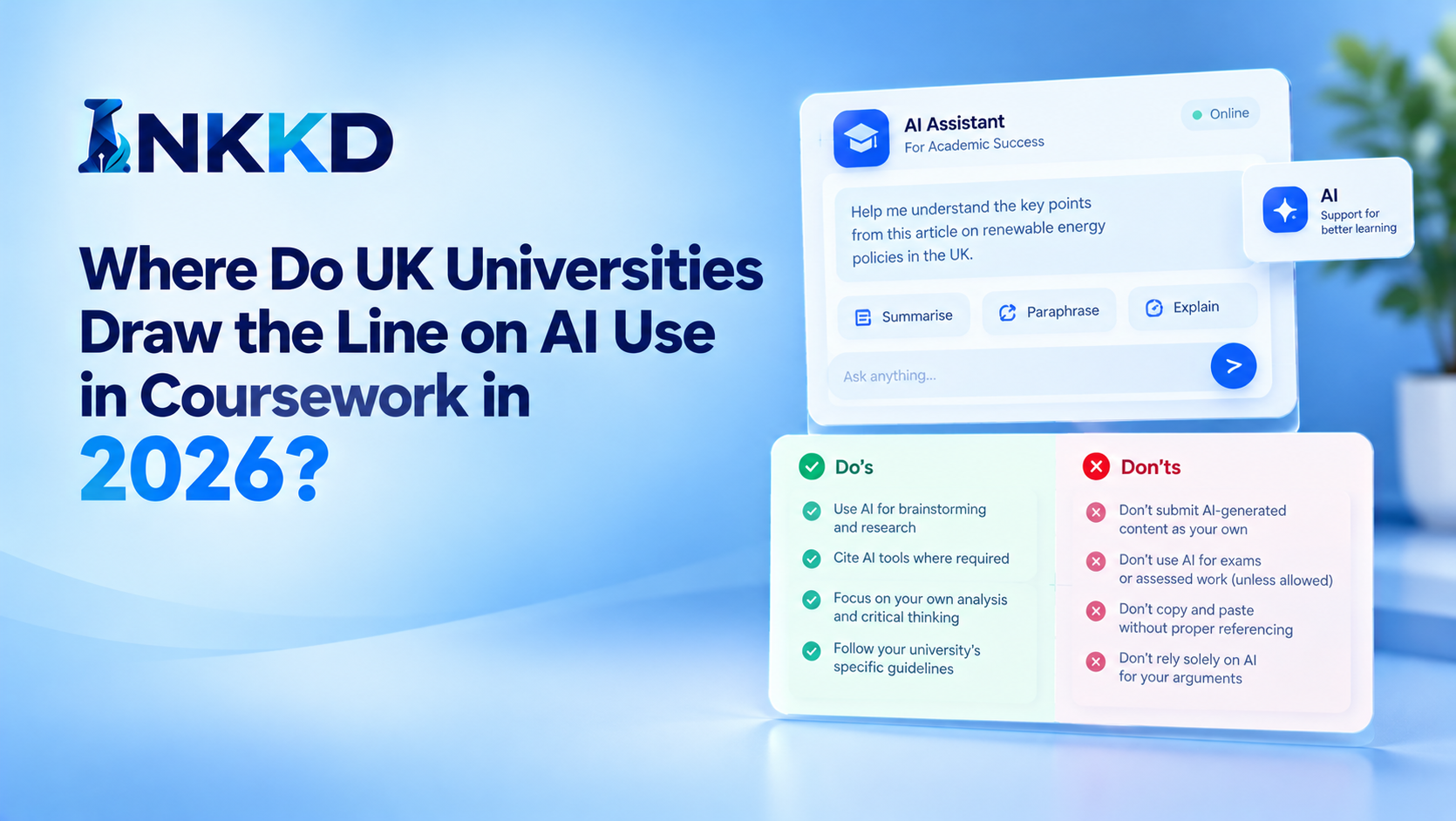
Clear boundaries govern AI use in coursework in UK universities, separating responsible study support from academic misconduct. Most institutions permit generative software for planning, brainstorming, and structuring ideas when specific module rules allow it, but submitting machine-written text as personal work remains strictly prohibited. Individual departments and degree programmes establish distinct criteria based on subject requirements and assessment goals.
“Academic regulations focus on protecting personal development, verifying that awarded grades reflect the individual knowledge and critical analysis of the registered student.”
Institutional policies vary across the higher education sector, meaning that permission depends on the specific assessment brief, subject discipline, and task instructions. Students who check assignment guidance before drafting their submissions protect their academic standing and keep their research within legitimate study practices.
Permitted Support and Unacceptable Practices
Course teams distinguish between preparatory assistance and unauthorized content generation across all degree levels. Acceptable usage focuses on developing ideas, while unacceptable practices replace the student voice with automated text.
Acceptable Study Support
- Brainstorming broad essay structures and exploring potential revision topics.
- Asking tools to explain challenging theoretical concepts in plain language.
- Checking syntax, punctuation, and draft clarity before final submission.
- Generating practice exam questions to test personal subject comprehension.
Prohibited Conduct
- Presenting computer-generated paragraphs or entire essays as original work.
- Fabricating citations, study data, or references invented by software.
- Using generative assistance in assessments where all outside tools are banned.
- Concealing automated help when module briefs require formal acknowledgement.
Tolerances shift between academic departments. While computer science modules might encourage code generation for analysis, literature or law departments often restrict drafting assistance to protect textual evaluation.
Declaring Generative Tools and Student Accountability
Transparency is a central requirement when completing academic work in UK higher education. Submissions that draw on permitted assistance generally require clear declarations explaining how and where software was used during preparation.
- Follow institutional referencing styles to cite software platforms, version numbers, and query prompts accurately.
- Provide an accompanying statement outlining the specific role of the tool, such as grammar correction or structural outlining.
- Verify every reference and factual statement, because automated platforms frequently invent non-existent book titles and journal articles.
- Avoid uploading confidential study material, peer responses, or private personal information into public online platforms.
Practical Steps When Coursework Rules Are Unclear
Because policies differ across faculties, students must verify expectations prior to starting an assessment. Confusion over guidelines does not protect a submission from academic misconduct penalties.
- Read the written assignment brief carefully to locate specific notices regarding third-party software tools.
- Consult the module handbook and departmental guidelines for baseline policies on digital assistance.
- Review university-wide academic integrity regulations published by the student registry or quality office.
- Email the module leader or seminar tutor well before the submission deadline to request written clarification.
Keeping a comprehensive audit trail of research notes, early plans, and initial drafts helps demonstrate authentic individual progress. Retaining version history provides clear evidence of personal effort should questions arise during grading.