How UK Journalists Can Transcribe Interviews Better Under Tight Deadlines
Dive Into The World Of Transcription
How UK Journalists Can Transcribe Interviews Better Under Tight Deadlines
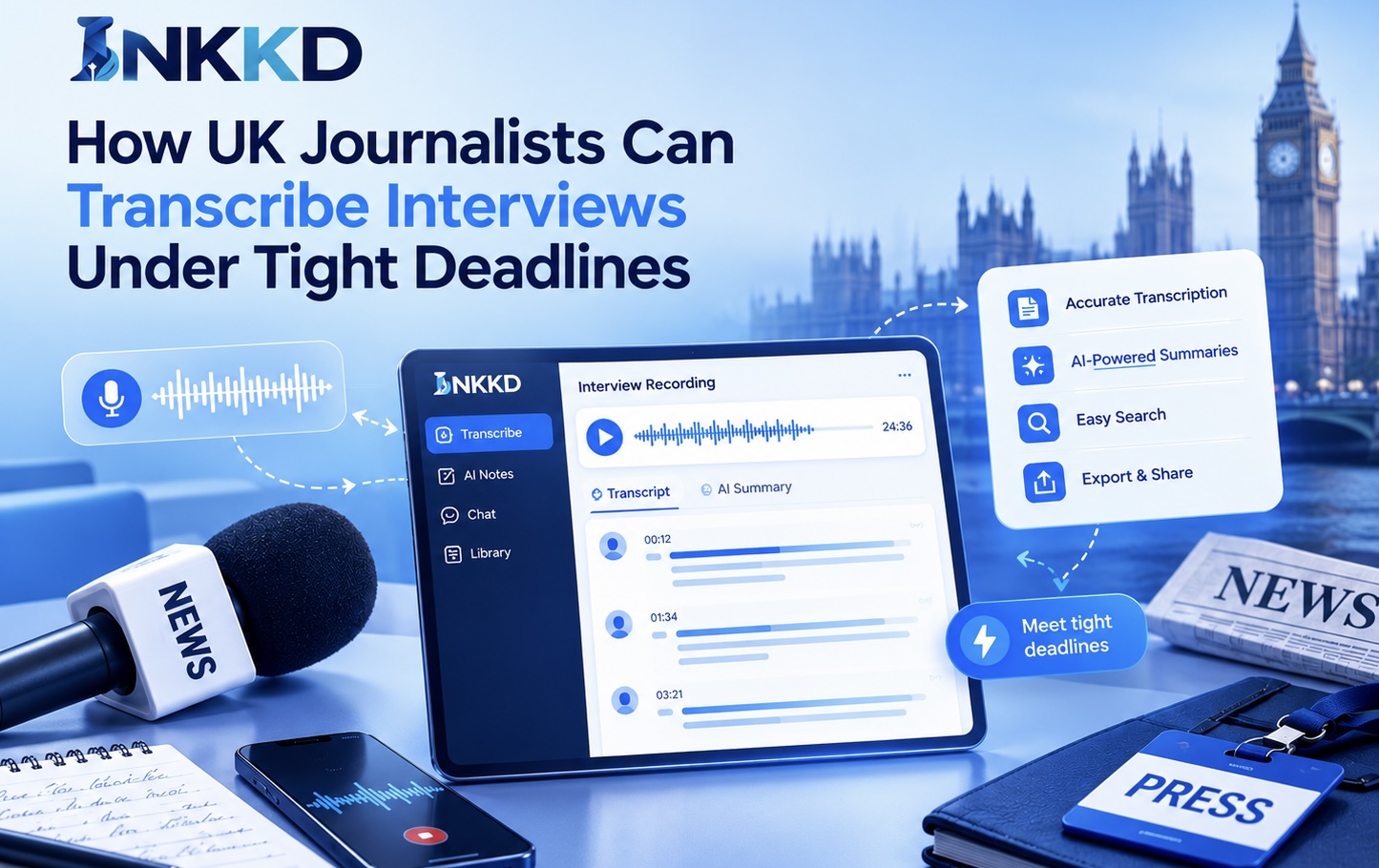
To transcribe interviews under tight deadlines, reporters combine high-quality source audio with automated speech recognition and focused human verification. Immediate logging of crucial quotations during the conversation cuts processing time, allowing critical phrases to reach the copy desk ahead of rolling deadlines. Strict attention to verbatim accuracy on contested remarks protects reporting from factual disputes and legal challenges.
The chosen transcription method depends on publication lead times, the acoustic clarity of the recording, and the legal sensitivity of the interview subject. Straightforward background interviews permit fast automated drafting, whereas contentious political grilling demands meticulous cross-checking against the original master recording.
Preparing Before an Interview to Speed Up Turnaround
Rapid transcription begins well before pressing the record button. Establishing clear contextual anchors ahead of the conversation limits subsequent confusion during transcription.
- Request the correct spelling of the interviewee's full name, professional title, and organisation during initial contact.
- Compile an advance glossary containing specialised industry terms, legislative references, and constituency names.
- Establish an agreed interview focus so responses remain structured around core editorial themes rather than wandering topics.
- Test recording hardware and primary backup software in advance to confirm functional gain levels and available storage space.
Improving Audio Quality at the Point of Capture
Unclear sound remains the single greatest bottleneck to rapid transcription. Clear speech files process through speech-to-text engines with far higher precision and require significantly fewer replays during manual checks.
Position directional microphones close to the speaker's mouth while using foam windshields indoors and deadcat covers outdoors. Close proximity maximises vocal presence over ambient room reverb, yielding clean waveforms that automated systems parse without dropping syllables.
Selecting an appropriate recording environment in the field substantially reduces background rumble, echo, and wind distortion. In public areas, positioning the subject away from coffee machines, heavy road traffic, or air-handling vents protects vocal frequencies.
Verifying Names, Facts, and Quotations Against the Recording
Speed must never outpace factual accuracy when producing copy under tight editorial constraints. A single misquoted word can transform an interview's legal implications, creating exposure to defamation claims or regulatory complaints under the IPSO Editors' Code of Practice.
Double-checking transcribed quotes directly against the master recording protects both the publication and the subject. When an interviewee makes controversial assertions regarding public figures or commercial entities, every word requires verification. Confirming that the audio matches the draft text reduces the risk of context stripping, where a qualifying word like "allegedly" or "perhaps" is accidentally omitted during transcription.
Cross-Reference Proper Nouns
Check every mentioned individual, corporate body, and public institution against authoritative registers, such as Companies House, official public records, or departmental directories.
Audit Numerical Assertions
Confirm quoted financial figures, population statistics, and policy dates against primary documents to catch instances where an interviewee simply misspoke on tape.
Editing Transcripts Efficiently While Preserving Meaning
Spoken communication is naturally untidy, replete with false starts, repeated phrases, and conversational filler. Transforming raw speech into readable journalistic prose requires sensible editing that respects verbatim integrity.
Advantages of Clean Verbatim
- Improves reader comprehension by stripping distracting conversational fillers and repeated syllables.
- Accelerates copy production by presenting the speaker's core argument in concise, punchy clauses.
- Preserves grammatical flow without altering the vocabulary or underlying sentiment of the interviewee.
Limitations of Clean Verbatim
- Risks inadvertently smoothing over revealing hesitation or genuine uncertainty in controversial interviews.
- Requires editorial judgement to prevent altering subtle nuances or conversational tone.
- Provides less forensic protection if an interviewee subsequently alleges their remarks were substantially distorted.