How to Convert Lecture Audio to Notes When the Lecturer Has a Strong Accent
Converting accented lecture audio into high-quality notes relies on clear audio capture, intelligent transcription, and disciplined manual verification.
How to Convert Lecture Audio to Notes When the Lecturer Has a Strong Accent
Converting lecture audio into clear study notes requires good audio recording, speech-to-text transcription, and careful verification of important terms. Combining automated transcription with targeted audio playback helps students create accurate and organized study guides. [Explore INKKD Features (https://www.inkkdai.com/#features)
The success of this process depends on microphone placement, audio clarity, and cross-checking the transcript with official course materials.
1. Capturing Clear Lecture Audio in Class
Transcription software works better when the speaker's voice is clear and background noise is minimal. Sitting near the front of the lecture hall reduces background noise and helps capture the lecturer's voice. Placing the recording device on a stable surface facing the speaker can further improve recording quality.
Adjusting recording settings before the lecture prevents sound distortion. Phone microphones can work well when unobstructed, while directional microphones may provide better sound isolation. Clear audio helps speech recognition software identify unfamiliar words and accents more accurately.
2. Converting Spoken Lectures into Searchable Text
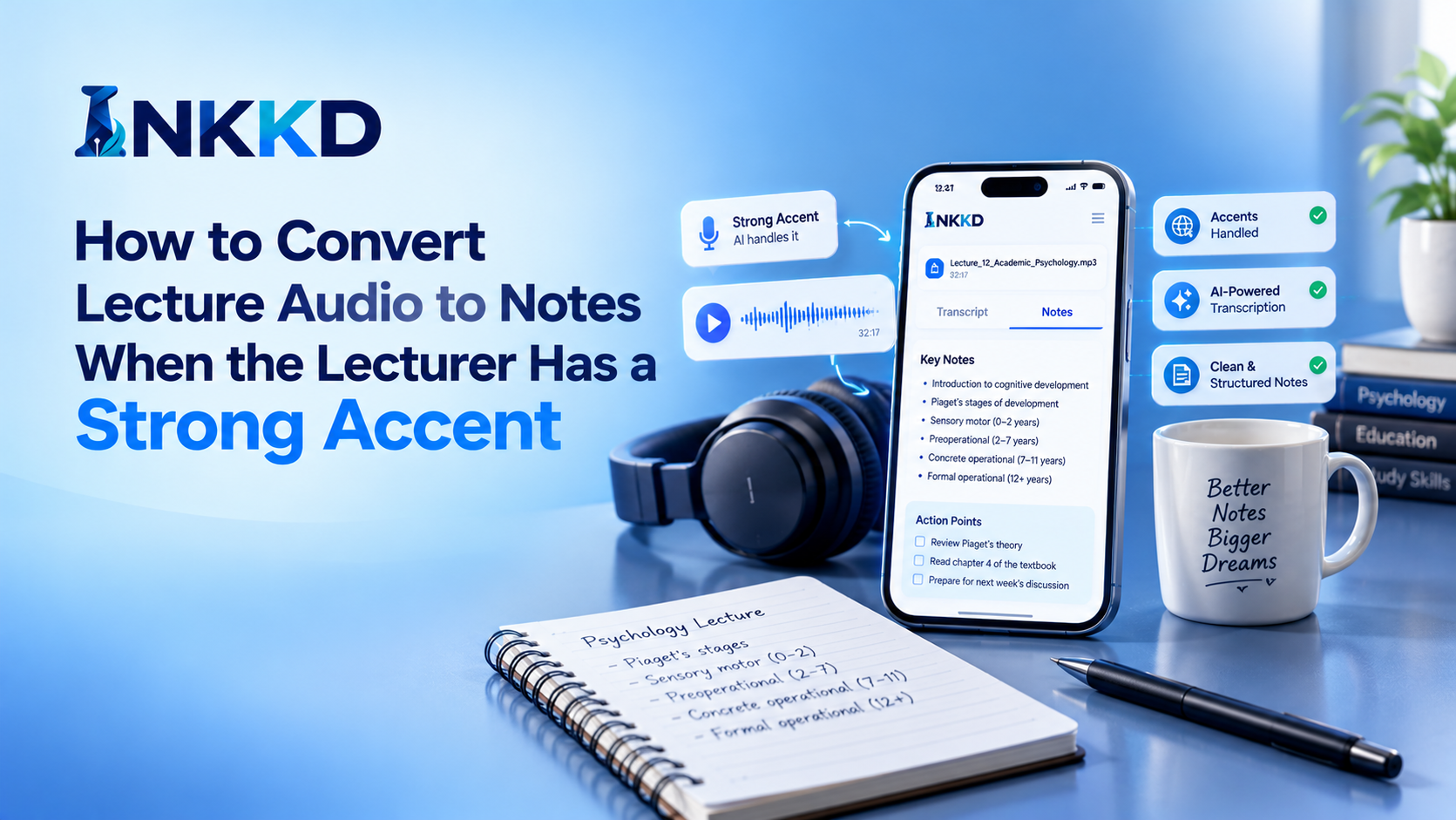
After class, converting audio recordings into text makes revision easier. Uploading recordings to INKKD converts spoken explanations into searchable text that students can review at their own pace.
Automated transcription creates a written record of the lecture, allowing students to focus on understanding concepts instead of writing every word. Searchable transcripts also make it easier to find specific keywords, definitions, concepts, and formulas.
3. Creating Structured Study Notes from Long Transcripts
Raw transcripts contain pauses, repetitions, and unnecessary details that make studying difficult. Transforming transcripts into organized AI Notes helps students create concise study outlines focused on important concepts and explanations.
- Highlighting definitions, formulas, and foundational theories.
- Grouping related information under logical headings.
- Summarizing procedural steps and historical sequences.
Structured notes help students understand key principles without rereading lengthy transcripts. Organized outlines also make regular revision more efficient.
4. Using AI Chat to Clarify Difficult Topics
When a lecturer's accent makes an explanation difficult to understand, AI Chat can help clarify confusing sections. Students can provide specific transcript excerpts and ask questions to explore complicated theories in greater depth.
Using targeted prompts helps generate alternative analogies, simplified explanations, and step-by-step breakdowns of complex concepts.
This approach works like an on-demand tutor, helping students understand difficult material and address misunderstandings before exam preparation.