How Small Law Firms Use AI Transcription to Organise Client Meeting Notes
AI transcription offers small law firms a practical method to capture extensive client discussions, extract core chronologies, and produce structured attendance notes.
How Small Law Firms Use AI Transcription to Organise Client Meeting Notes
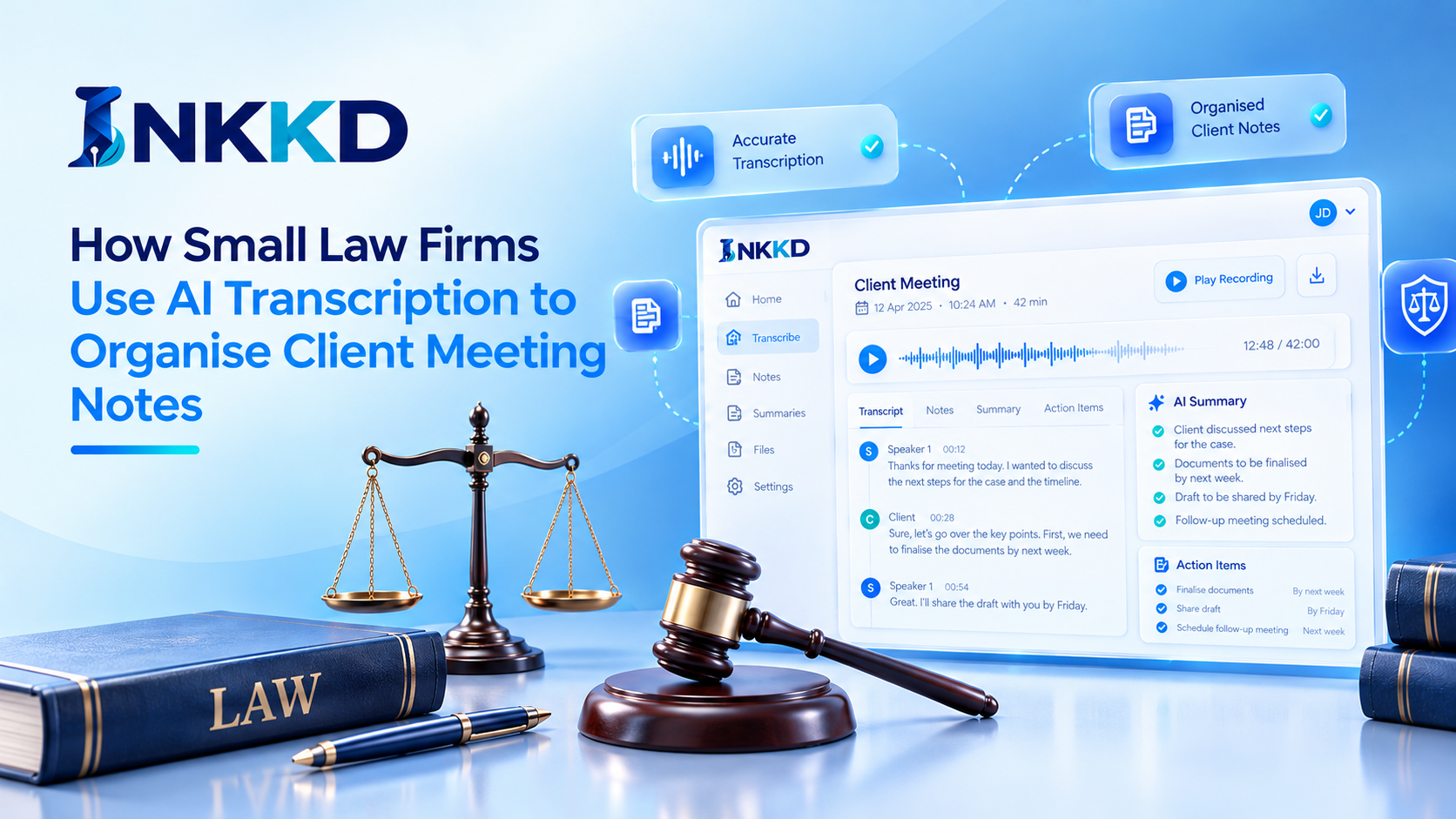
AI transcription for small law firms converts spoken consultations, telephone calls, and client interviews into structured, searchable text records. Small legal practices use tools like INKKD to capture client instructions, identify relevant factual chronologies, and produce reliable written summaries without spending non-billable periods deciphering manual shorthand notes.
Recording and Uploading Client Consultations
Legal practitioners handle multiple consultations daily, ranging from initial intake sessions to witness interviews and tactical strategy conferences. Capturing these conversations through direct audio recording or uploading pre-recorded files into INKKD provides an immediate foundation for building an accurate administrative record.
- Direct recording of face-to-face initial instructions and formal office consultations.
- File upload support for remote conferencing audio, telephone calls, and dictation memos.
- Automated speaker separation to distinguish client responses from lawyer advice.
- Timestamped text alignment for straightforward cross-referencing against specific conversation points.
Condensing Lengthy Exchanges into Structured Summaries
Full transcripts contain conversational fillers, procedural pleasantries, and tangential remarks that clutter formal case management files. The AI Notes feature in INKKD distils sprawling transcripts into concise, professional meeting summaries that emphasize actionable legal intelligence.
Converting Conversation Transcripts into Formal Case Notes
Legal records demand consistency across attendance notes, internal memos, and formal case chronologies. Raw speech must be transformed into organized headings that mirror conventional practice management taxonomy.
Using INKKD, firms convert unstructured dialogues into standardized attendance notes complete with date indicators, attendees, summary of advice, and explicit client instructions. This structure aligns with auditing expectations and professional practice guidelines across common law jurisdictions.
- Standardized attendance note formats outlining attendee names, matters, and consultation dates.
- Explicit separation of factual background, client instructions, and preliminary legal advice.
- Categorized lists of required disclosure documentation and identified evidence sources.
- Clear records of fee structures, cost estimates, and client funding arrangements discussed.
Reviewing AI Outputs and Maintaining Verification Protocols
Automated speech systems provide remarkable speed, but automated text must never replace direct professional oversight. Fee earners bear final responsibility for the truth, precision, and sufficiency of every document in a client file.
Lawyers must treat AI transcripts as draft working records. Always verify dates, statutory citations, and specific financial sums against the primary recording or manual instructions before executing legal documents.
Legal terminology, foreign names, acoustic distortion, and regional accents can lead to occasional phonetic inaccuracies in raw transcripts. Practitioners must review machine-generated text and AI Notes before relying on them for litigation filings, formal advice, or settlement negotiations.
Protecting Confidentiality and Legal Professional Privilege
Client conversations are protected by stringent confidentiality rules and legal professional privilege. Introducing third-party software into this chain requires careful scrutiny of data routing and platform infrastructure.
Privilege Safeguards
- Restricting access strictly to authorized fee earners on the matter.
- Selecting software platforms with dedicated privacy boundaries.
- Maintaining audit trails for text viewing and export actions.
Compliance Risks
- Using open consumer transcription tools that store data for public model training.
- Allowing unauthorized internal staff access to sensitive files.
- Failing to document data processing agreements with vendors.
Firms must confirm that audio files and derived text remain secure against unauthorized inspection, commercial data pooling, or third-party model training. Preserving privilege requires maintaining strict control over who can access, download, or share consultation outputs.
Frequently Asked Questions
Does AI Transcription Replace the Fee Earner's Professional Judgment?
No. Automated transcription serves strictly as an administrative drafting tool to record spoken words. Legal practitioners retain exclusive responsibility for assessing evidence, advising clients, and confirming the legal significance of discussion points.
Is Formal Client Consent Mandatory Before Recording a Legal Consultation?
Lawyers should obtain informed consent before recording a client consultation and comply with applicable recording, privacy, and professional conduct requirements. The precise legal requirements vary by jurisdiction and circumstances.
How Does AI Transcription Integrate with Existing Practice Management Software?
Transcripts and structured AI Notes can be copied or exported directly into Word documents and centralized case management files. This flexibility enables smooth incorporation into standard attendance note templates.