How Agentic AI and AI Chatbot Function Differently In 2026
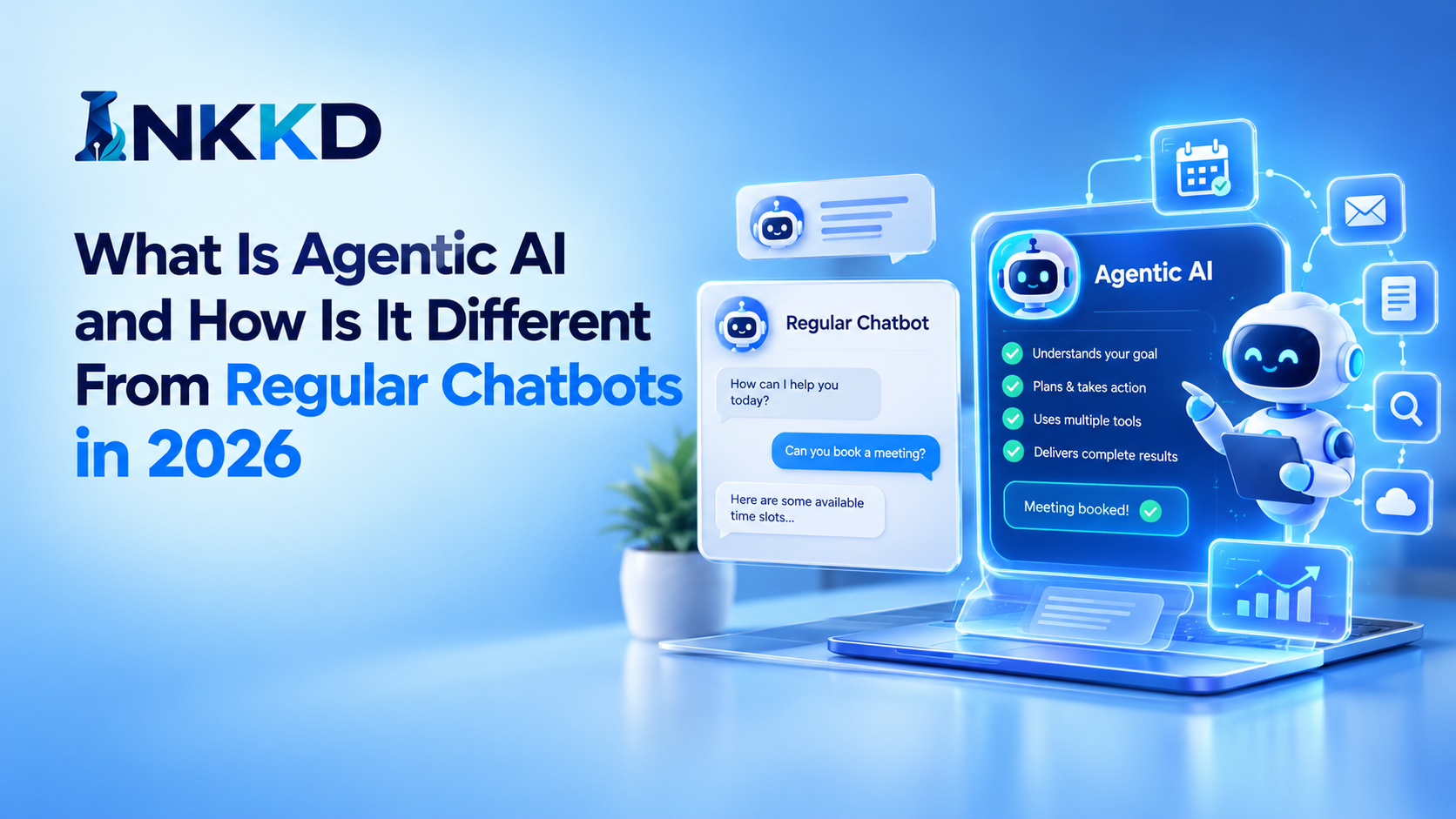
The digital landscape evolves rapidly, shifting our expectations for software. Many people now ask, what is agentic ai and how is it different from regular chatbots in 2026? While standard conversational tools simply reply to prompts, these new systems take action to complete complex tasks.
How Agentic AI and AI Chatbot Function Differently In 2026
The landscape of modern technology is shifting rapidly as we move toward more autonomous systems. While traditional software requires constant human input, new intelligent agents can operate with a higher degree of independence. This transition marks a significant departure from the tools we used just a few years ago.
Agentic AI Definition and Core Capabilities
At its heart, agentic AI refers to systems designed to pursue complex objectives without needing step-by-step instructions. These agents possess the core capability to reason through problems and adjust their approach based on real-time feedback. This represents a bold leap in the future of AI, moving from passive response to active problem-solving.
- Goal-oriented reasoning: The ability to define the best path to a desired outcome.
- Self-correction: Adjusting tactics when obstacles arise during a task.
- Tool integration: Interacting with external software to complete work.
How Agentic AI Understands Goals, Plans Tasks, and Takes Action
The process begins when a user provides a high-level objective, such as "organize a travel itinerary." Instead of just providing a list of links, the agent breaks this down into smaller, manageable steps. This level of AI development allows the system to search for flights, compare prices, and even draft calendar invites.
The agent continuously monitors its progress against the original goal. If a flight is unavailable, it does not simply stop or report an error. It automatically searches for alternatives, ensuring the final result meets the user's specific requirements.
Agentic AI vs. Regular Chatbots: The Key Functional Differences
If you want to grasp the current chatbot evolution, you must look at the functional differences in how they process requests. While early systems relied on rigid patterns, modern AI technology allows for a much deeper level of interaction. Understanding these changes helps businesses decide which tools best fit their operational needs.
Examples Using Customer Support, Scheduling, and Internal Workflows
To see how these differences manifest in daily operations, consider the following table comparing traditional methods with agentic capabilities:
| Use Case | Regular Chatbot | Agentic AI |
|---|---|---|
| Customer Support | Provides FAQ links | Processes refunds and updates orders |
| Scheduling | Shows calendar availability | Negotiates times and sends invites |
| Internal Workflows | Summarizes documents | Drafts, reviews, and files reports |
By moving beyond simple text generation, these systems transform how we interact with software. Stronger autonomy means that your team can focus on high-value strategy while the AI handles the repetitive, multi-step execution of daily tasks.
Single-Turn Answers Compared With Multi-Step Task Execution
Traditional bots are designed for single-turn interactions. You ask a question, and the system provides a static answer based on its training data. Once the answer is delivered, the interaction effectively ends.
In contrast, agentic systems excel at multi-step task execution. They break down complex requests into a series of logical steps, maintaining context throughout the entire process until the final goal is achieved.
Scripted Conversation Flows Compared With Adaptive Reasoning
Most regular chatbots follow a pre-defined decision tree. If a user deviates from the expected path, the bot often fails to provide a helpful response.
Agentic systems utilize adaptive reasoning to navigate unpredictable scenarios. They evaluate the user's intent in real-time and adjust their strategy, ensuring that the conversation remains productive even when the input is ambiguous.
Benefits, Risks, and Practical Uses for Teams
Businesses today are shifting from simple automated responses to more capable, autonomous digital workers. This shift represents a major leap in chatbot evolution, moving from static scripts to dynamic problem-solving systems. Understanding these artificial intelligence differences is the first step toward integrating these tools into your daily operations.
How Agentic AI Can Improve Productivity and Customer Experiences
The primary advantage of this agentic AI technology lies in its ability to handle multi-step workflows without constant hand-holding. By managing repetitive tasks, these systems allow staff to focus on high-value creative work. Customers benefit from faster resolution times, as the AI can navigate complex databases to provide accurate, real-time answers.
Everyday Applications in Sales, Operations, Research, and IT Support
In sales, these systems can qualify leads by researching prospect history and drafting personalized outreach. Operations teams use them to sync data across fragmented platforms, while researchers rely on them to synthesize vast amounts of documentation. IT support departments also see gains, as agents can troubleshoot common hardware issues and automate ticket routing.
| Feature | Regular Chatbot | Agentic AI |
|---|---|---|
| Task Scope | Single-turn queries | Multi-step workflows |
| Decision Making | Scripted logic | Adaptive reasoning |
| System Access | Read-only | Read and write access |
| Autonomy | Low | High |
Why Human Oversight Remains Essential for High-Impact Decisions
While the agentic AI definition implies a high level of independence, human judgment is still the final authority. Complex business decisions often require nuance that current models cannot fully replicate. Keeping a human in the loop ensures that the output aligns with company values and long-term strategy.