Do Sales Teams Need an Agentic AI Call Assistant or Is Transcription Enough in 2026?
Selecting between call transcription and an agentic AI call assistant comes down to daily operational friction. If sales representatives lose significant selling time to administrative data entry, agentic tools deliver measurable relief.
Do Sales Teams Need an Agentic AI Call Assistant or Is Transcription Enough in 2026?
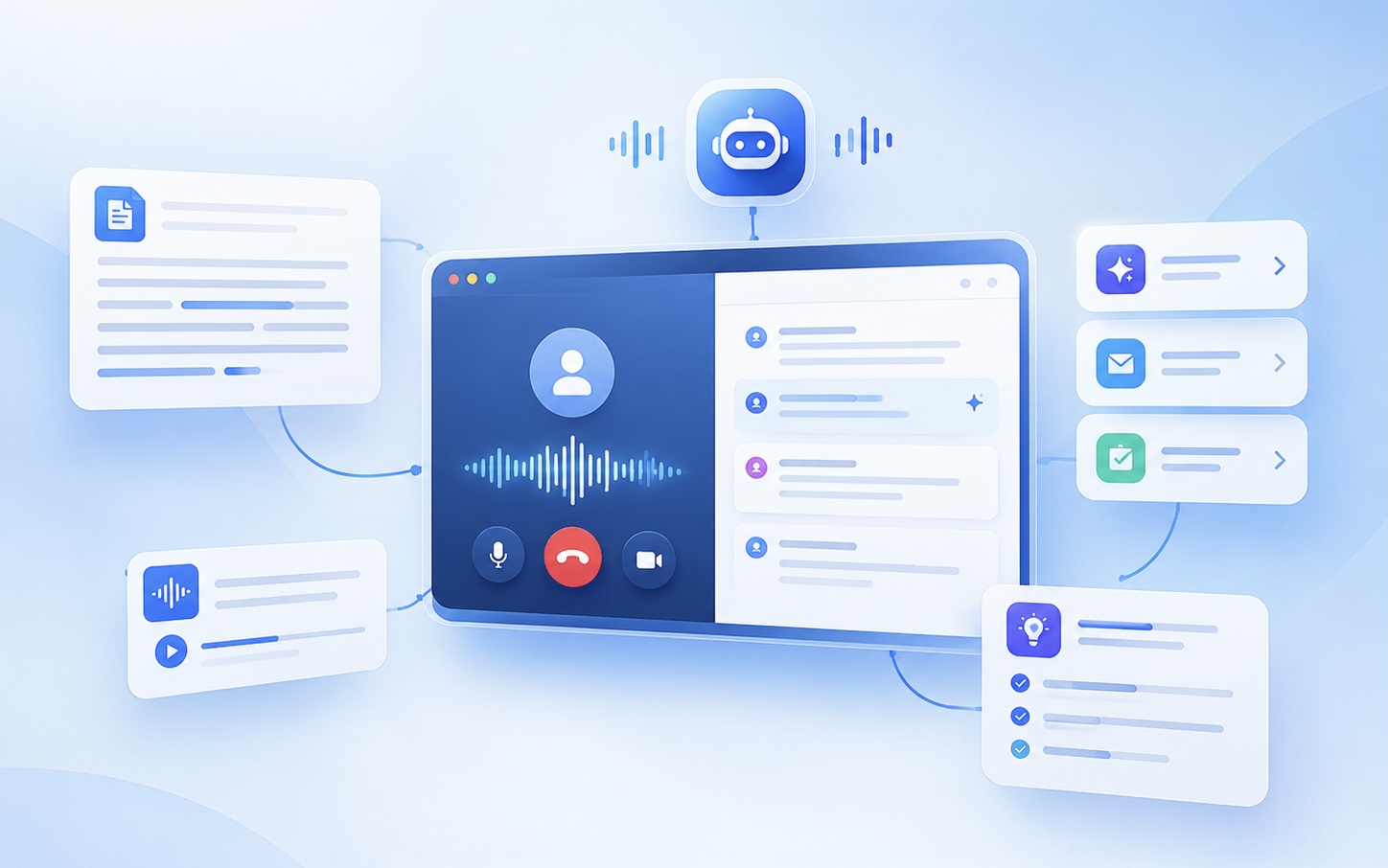
Sales teams choose an agentic AI call assistant when they require software to take automated actions during and after calls, while call transcription suffices for teams that only need readable records. Basic transcription converts spoken dialogue into written text for human review. In contrast, an agentic AI call assistant interprets conversational intent, updates CRM records, triggers follow-up workflows, and provides live guidance without human prompting.
The right choice depends on call volume, administrative workload, and the complexity of the sales cycle. Smaller teams with simple pipelines often manage well with written notes, whereas organisations handling multi-step deals gain more value from proactive workflow execution.
Call Transcription Tools vs. Agentic AI Call Assistants
Call Transcription Tools
- Converts spoken words into searchable written records.
- Requires reps to manually log call summaries and action items.
- Serves primarily as an archival reference for dispute resolution or manual review.
Agentic AI Call Assistants
- Interprets conversation context to trigger software actions automatically.
- Drafts personalised follow-up emails and updates pipeline fields.
- Surfaces real-time prompts and objection-handling guidance during live calls.
Comparing Automation, Coaching, Cost, and Privacy
Evaluating both options across operational criteria reveals distinct trade-offs between simplicity and capability. Transcription software delivers high linguistic accuracy with minimal configuration, while agentic platforms demand deeper systems integration to automate administrative cycles.
| Feature | Call Transcription | Agentic AI Call Assistant | Key Difference |
|---|---|---|---|
| Automation | Passive | Autonomous | Agentic systems complete post-call updates without human delay. |
| Real-Time Help | None | Active | Live prompts assist agents with complex customer enquiries. |
| Follow-Up | Manual | Automated | Follow-up messages are drafted and queued for approval. |
| Coaching | Post-Call | In-Call | Managers review structured data while reps get live hints. |
| Cost | Low | Moderate | Simple transcription tools fit modest operational budgets. |
| Privacy | Basic | Complex | Deeper integrations require stricter data permission controls. |
| Ease of Use | High | Moderate | Transcription installs quickly without extensive staff training. |
When Call Transcription Meets Team Needs
Transcription alone is often the most sensible approach for teams with straightforward sales cycles and low administrative overhead. If a sales representative handles five calls a day and updates a basic spreadsheet, adding automated agents introduces unnecessary software expense. A written transcript provides clear dispute records and helps managers verify agreement terms without paying for advanced computing tools.
Early-stage companies and specialised consultancies benefit from this lightweight setup. Representatives often prefer writing bespoke notes when sales relationships require unusual personal attention. In such environments, transcription gives reps a reliable memory aid while maintaining complete manual control over customer relationships.
Choose transcription when primary business goals involve record-keeping, compliance archives, or verifying call details rather than automating software tasks across multiple platforms.
When an Agentic AI Call Assistant Adds Value
Sales teams managing high call volumes or complex technical products benefit significantly from an agentic AI call assistant. When representatives spend substantial time each afternoon copying notes into CRM systems, logging contact details, and dispatching collateral, operational friction increases. An agentic assistant completes these steps immediately after the call concludes, reducing administrative fatigue.
Real-time enablement provides another clear operational advantage. For instance, when a prospective buyer mentions a competitor during a negotiation, the assistant displays relevant competitive positioning points on the agent's screen. This immediate support helps junior representatives respond accurately without pausing the dialogue or putting callers on hold.
Deploy agentic assistants when repetitive data entry delays customer follow-up, or when sales teams require contextual guidance during high-stakes discovery conversations.
Frequently Asked Questions
Does an agentic AI call assistant replace human sales representatives?
An agentic AI call assistant assists sales representatives by handling administrative chores and providing live reference notes. Human agents retain control over customer relationships and final deal terms.
Is transcription accuracy different between these two software types?
Both tools rely on speech-to-text models, and their word recognition accuracy depends on audio quality, language, and the underlying technology. The fundamental difference lies in how an agentic assistant applies reasoning to transcribed words to execute software tasks.
How complex is the implementation process for an agentic tool?
Standard transcription requires minimal software configuration, whereas an agentic assistant may require connections to CRM platforms and customer databases. Initial integration requires testing to set appropriate permissions and action triggers.